My Story
The Real
American Coast.
There is a working coast in this country and most people drive past it. I'm cataloguing every town on it, and flying to as many as I can.
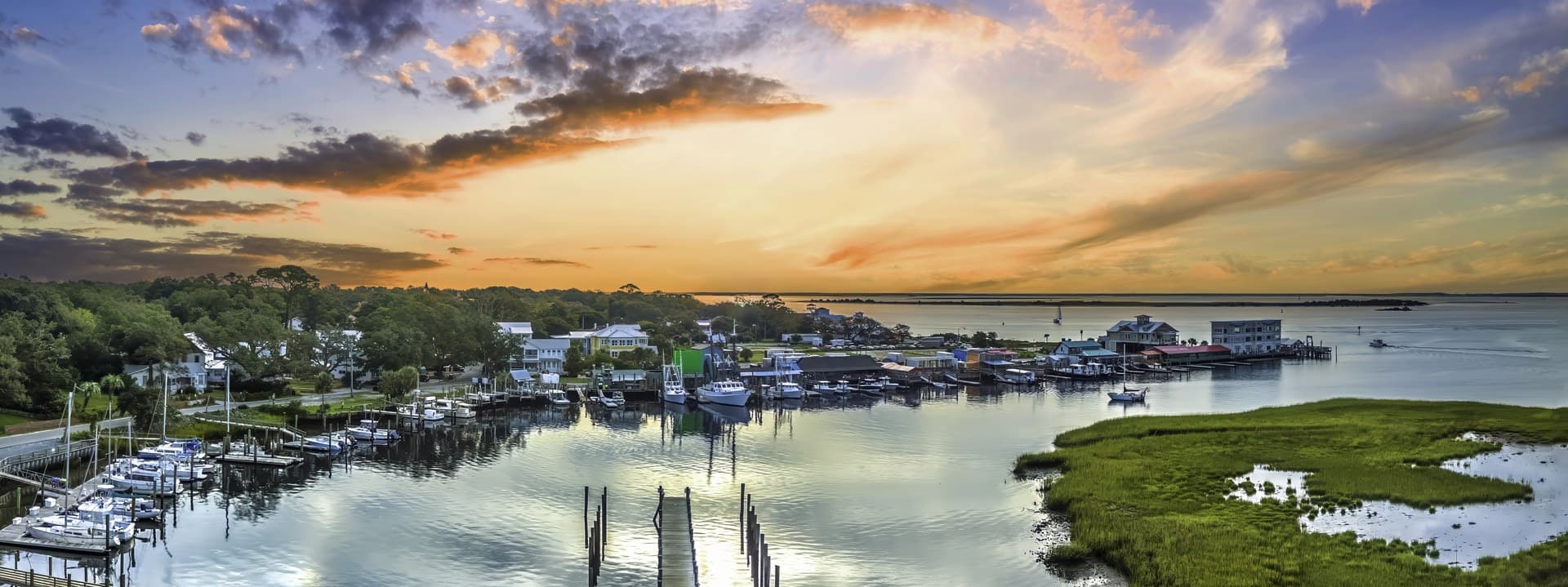
Southport, North Carolina
Where It Comes From
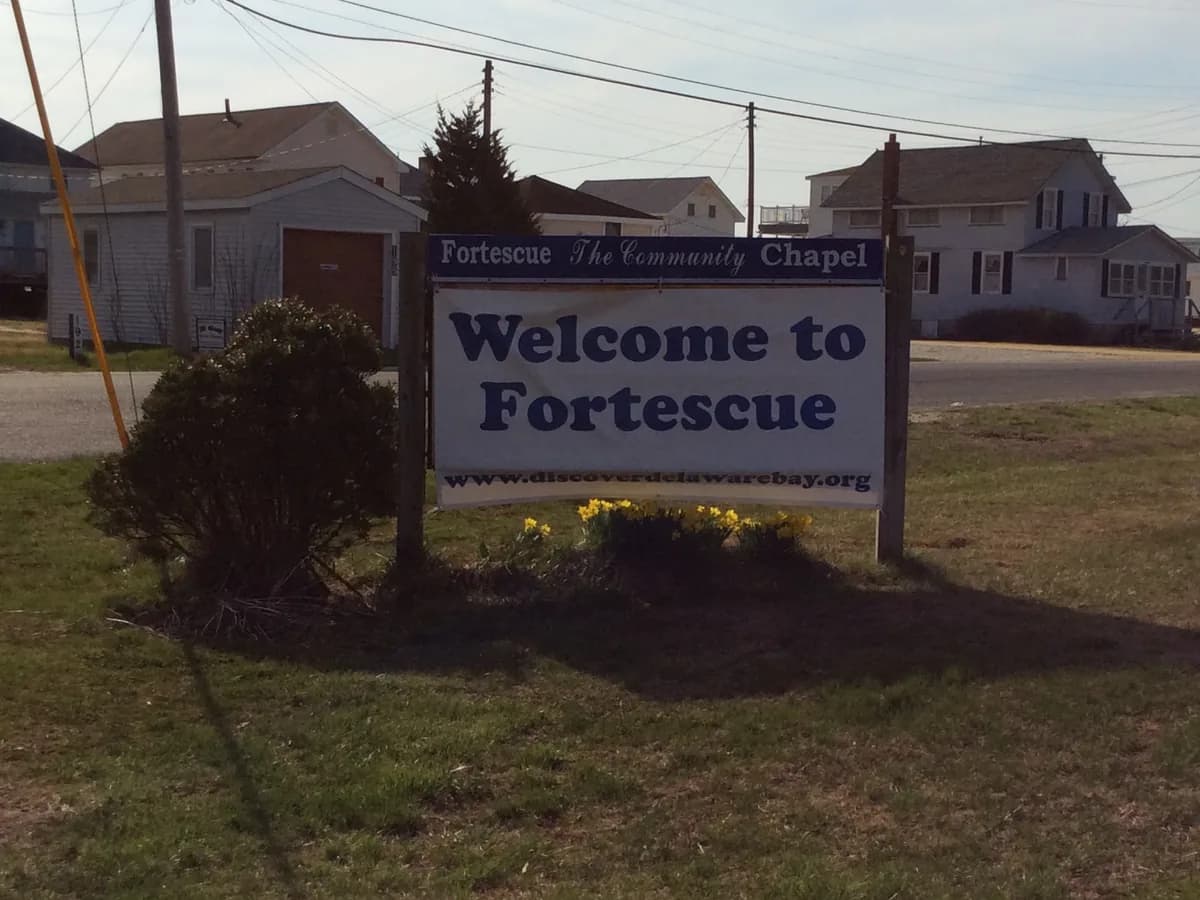
Fortescue, New Jersey
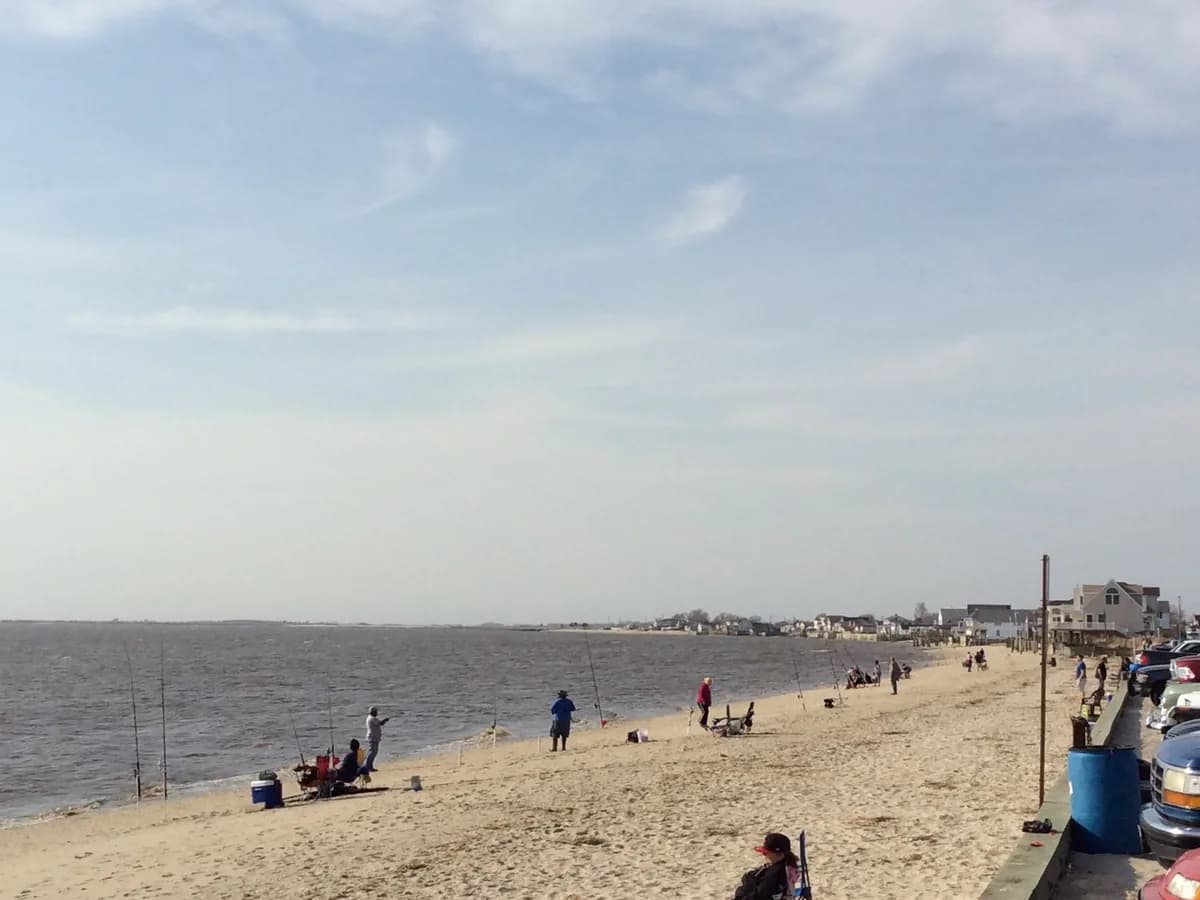
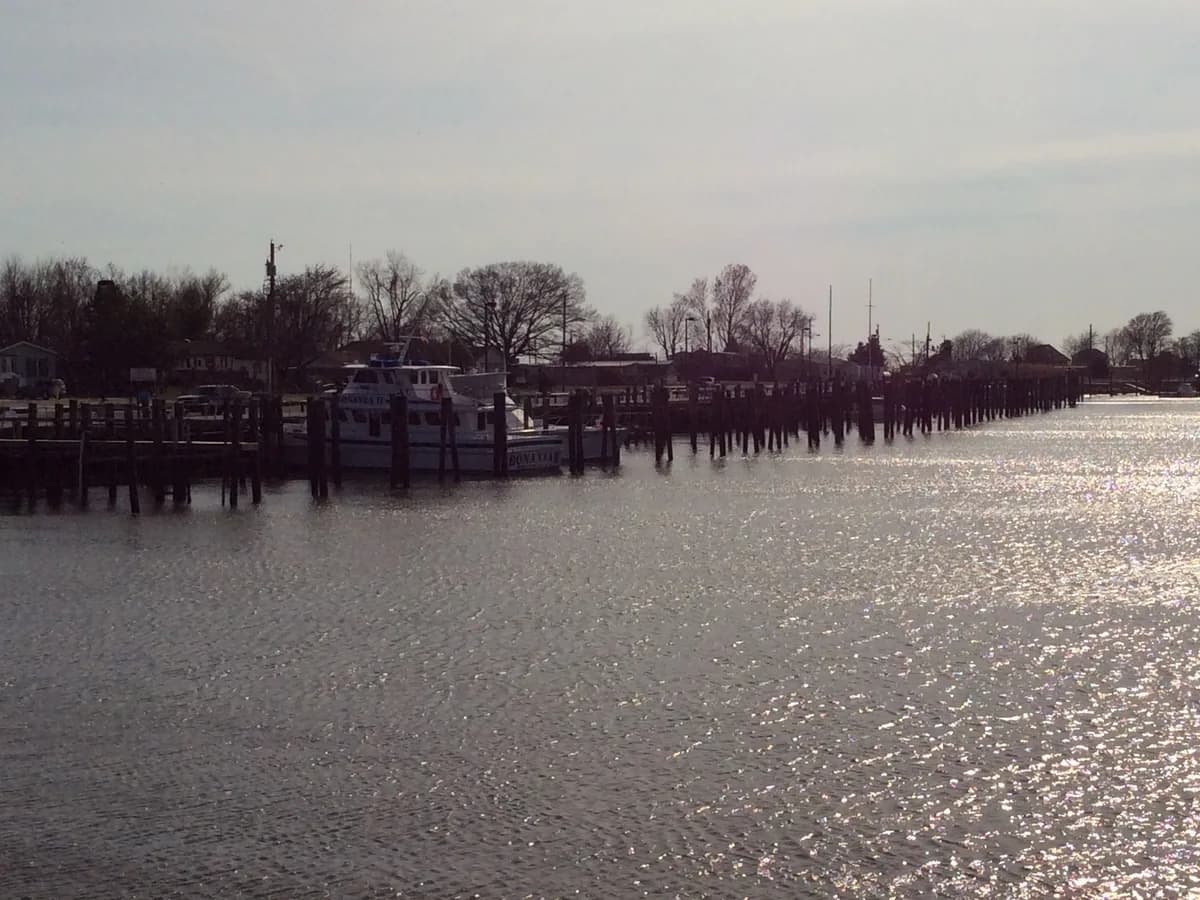
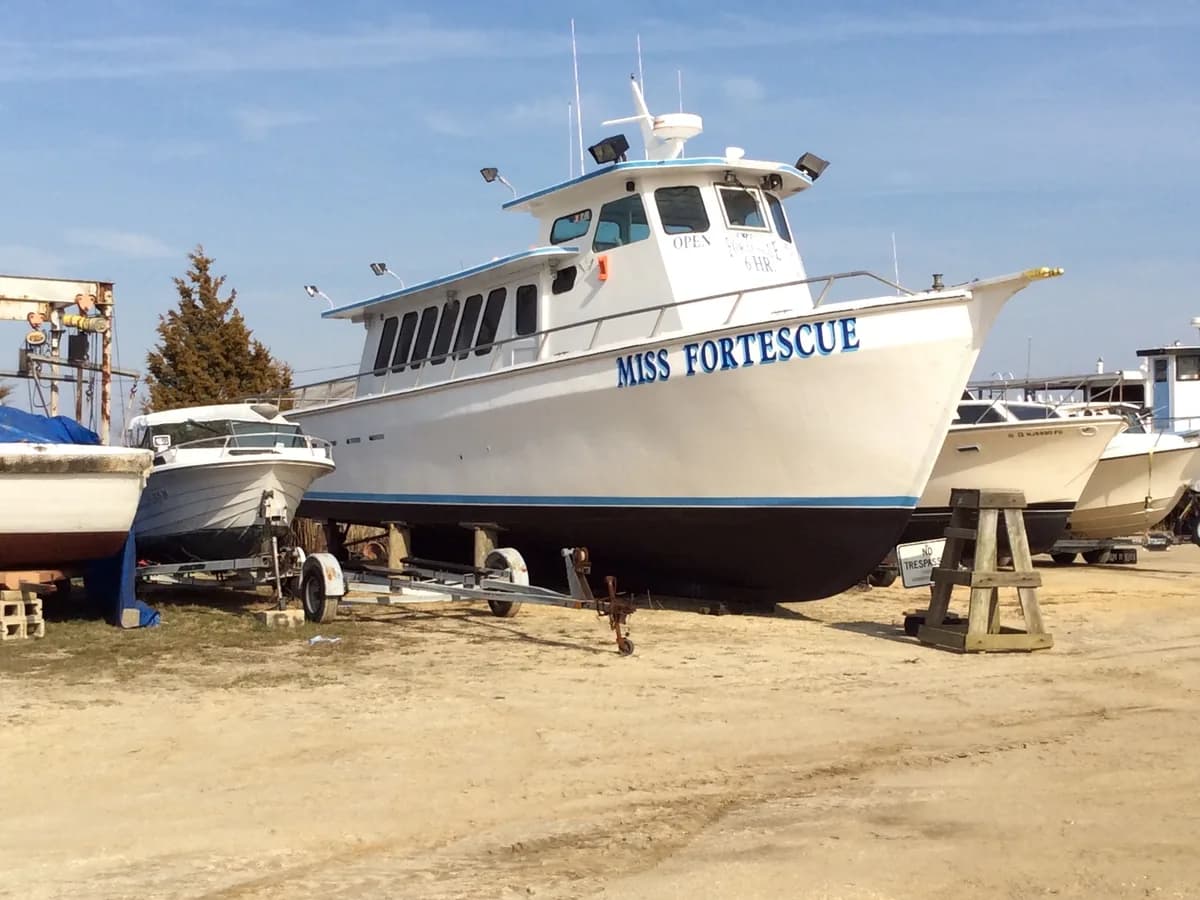
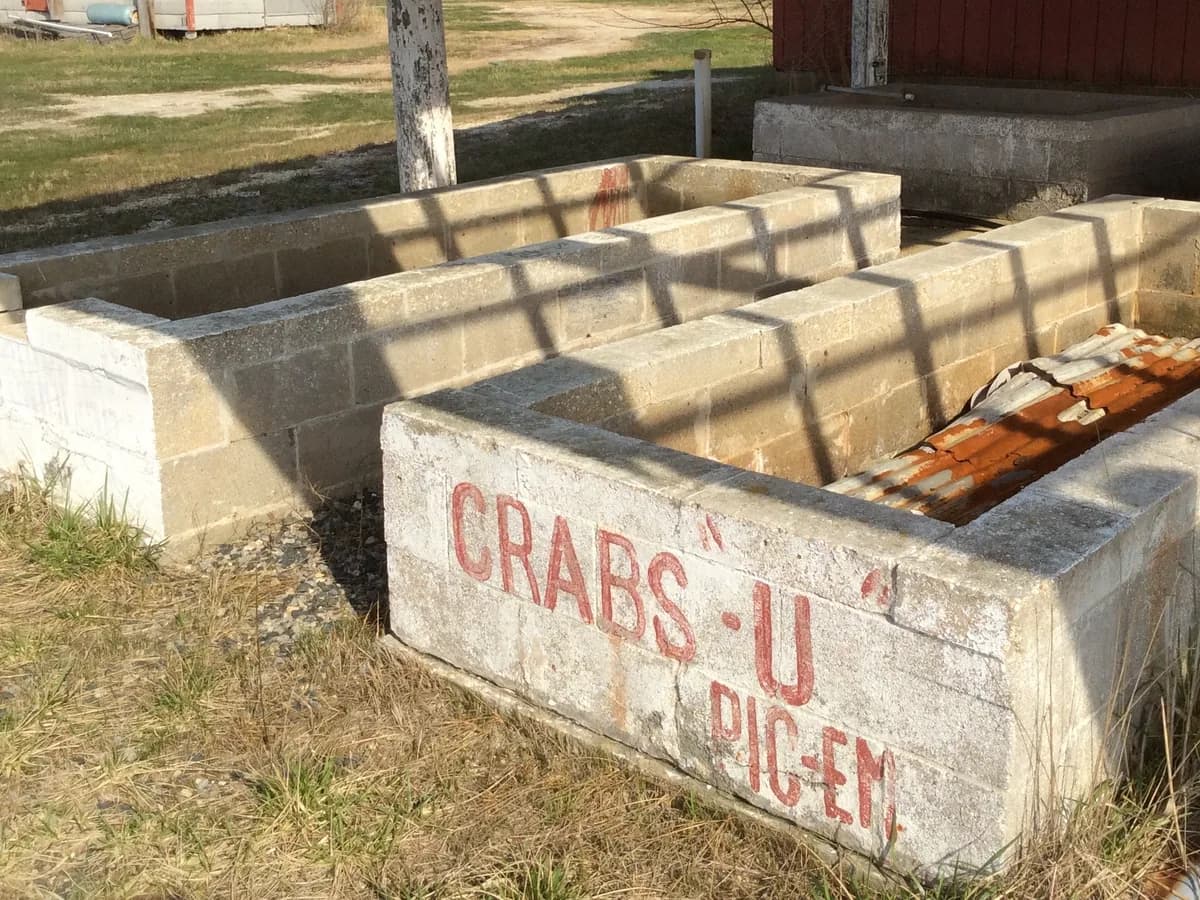
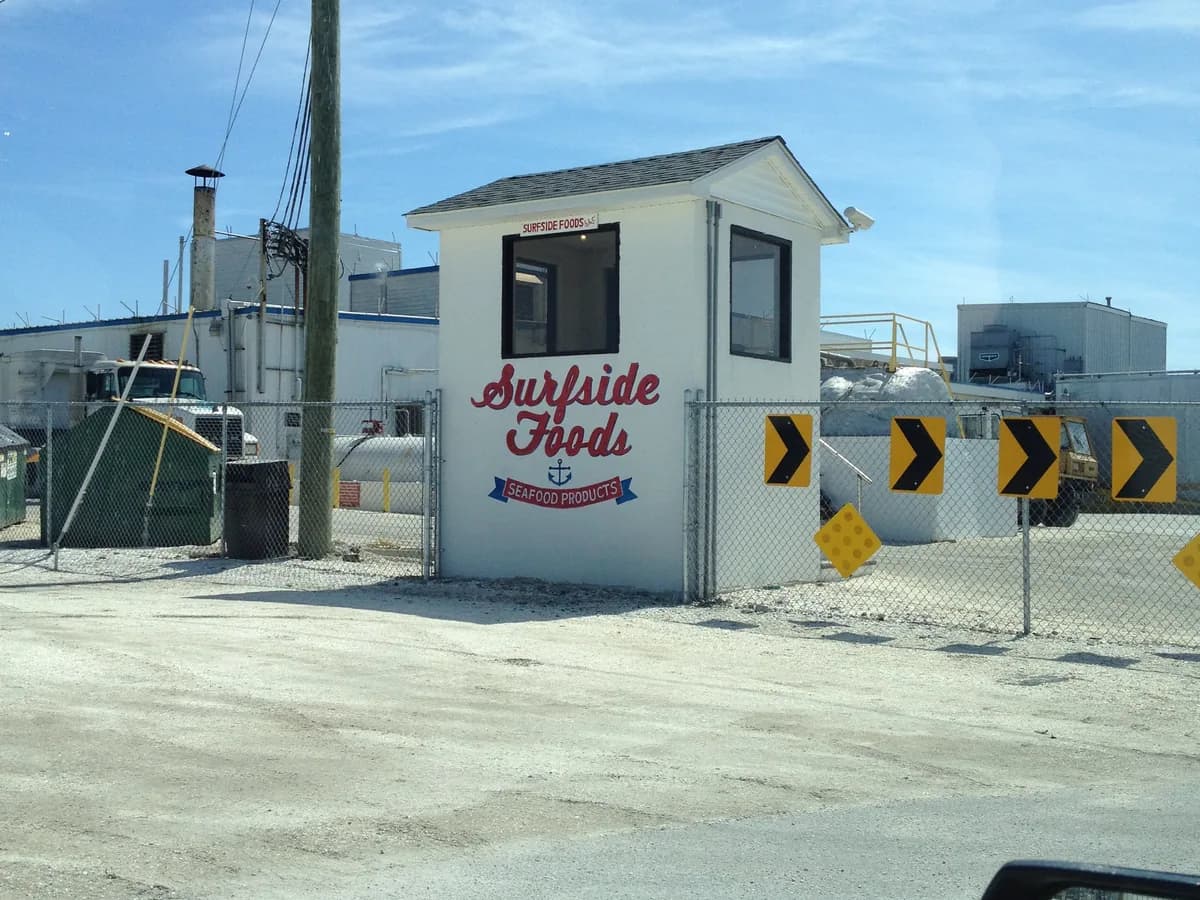
On the Delaware Bayshore of southern New Jersey, fifty miles almost exactly due south of Philadelphia, there is a small fishing village called Fortescue. Most people have never heard of it. It is a small piece of Delaware Bay coastline that produced good blue crab, good weakfish, and quiet summers for a family that made it their own.
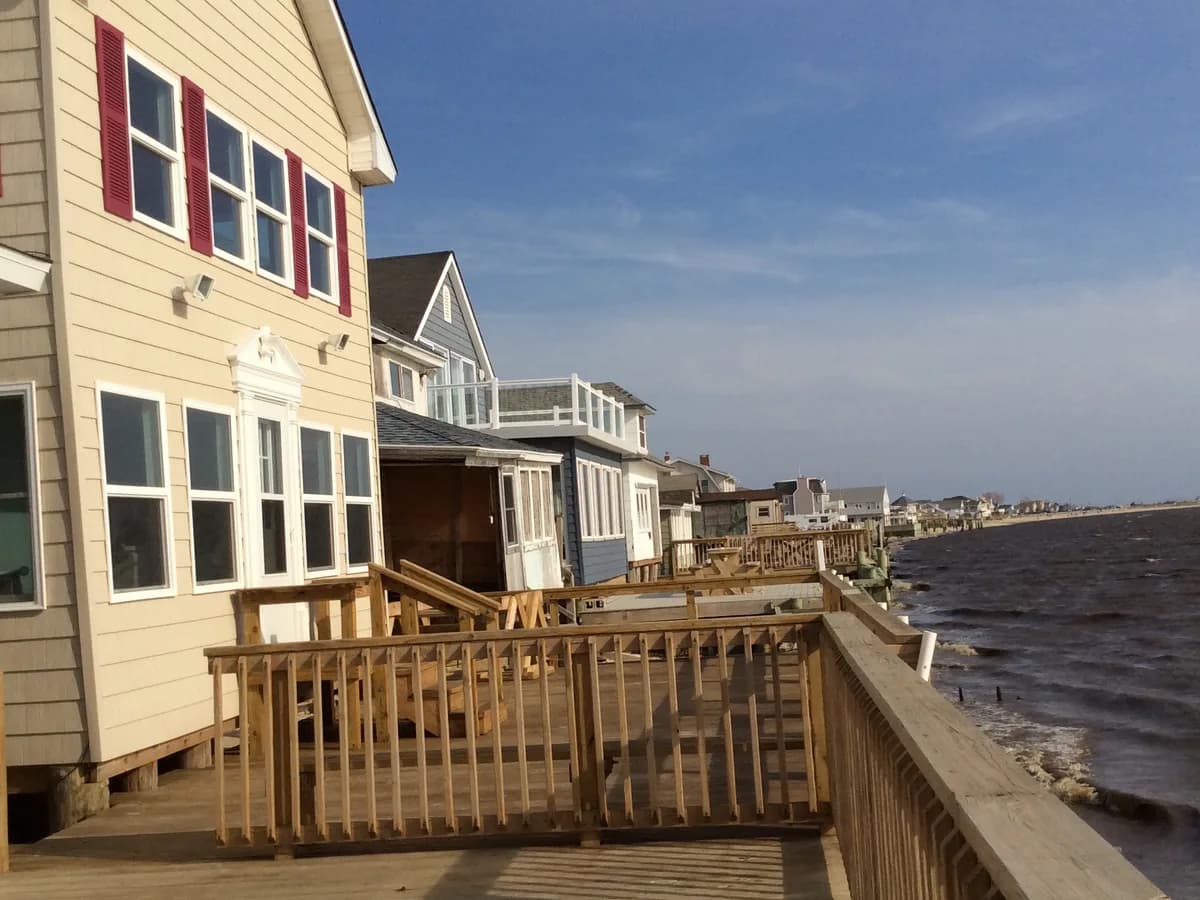
My great grandfather built a cottage there in the 1930s, and the bay became part of the family long before I came along. In 1969, my grandparents bought the cottage on New Jersey Avenue and made it their own — together, they made Fortescue a constant in the life of the family. After my grandfather passed, earlier than anyone wanted, my grandmother became the keeper of that place and everything it meant. Every summer she was there, and once she retired she lived there year-round. Every summer the crabs were on the table. That is not a small thing. That is heritage.
Those summers were my first education in what a working coast actually looks and smells and tastes like. My father's career moved us to Williamsburg when I was thirteen, and the James River taught me you could pull blue crab out of almost any water along this coast if you knew where to look. From there I went to school in Daytona Beach, with the Atlantic a few minutes from campus. Then Frederick, Maryland, where the Chesapeake was a short drive and the habit of finding good seafood close to the water never broke. And eventually into a career that turned every coast in the country into familiar territory — not as a tourist, but as someone who arrived by air, found the local dock, and ate what the water gave up that day. All of it traces back to that small bay in South Jersey. All of it traces back to her.
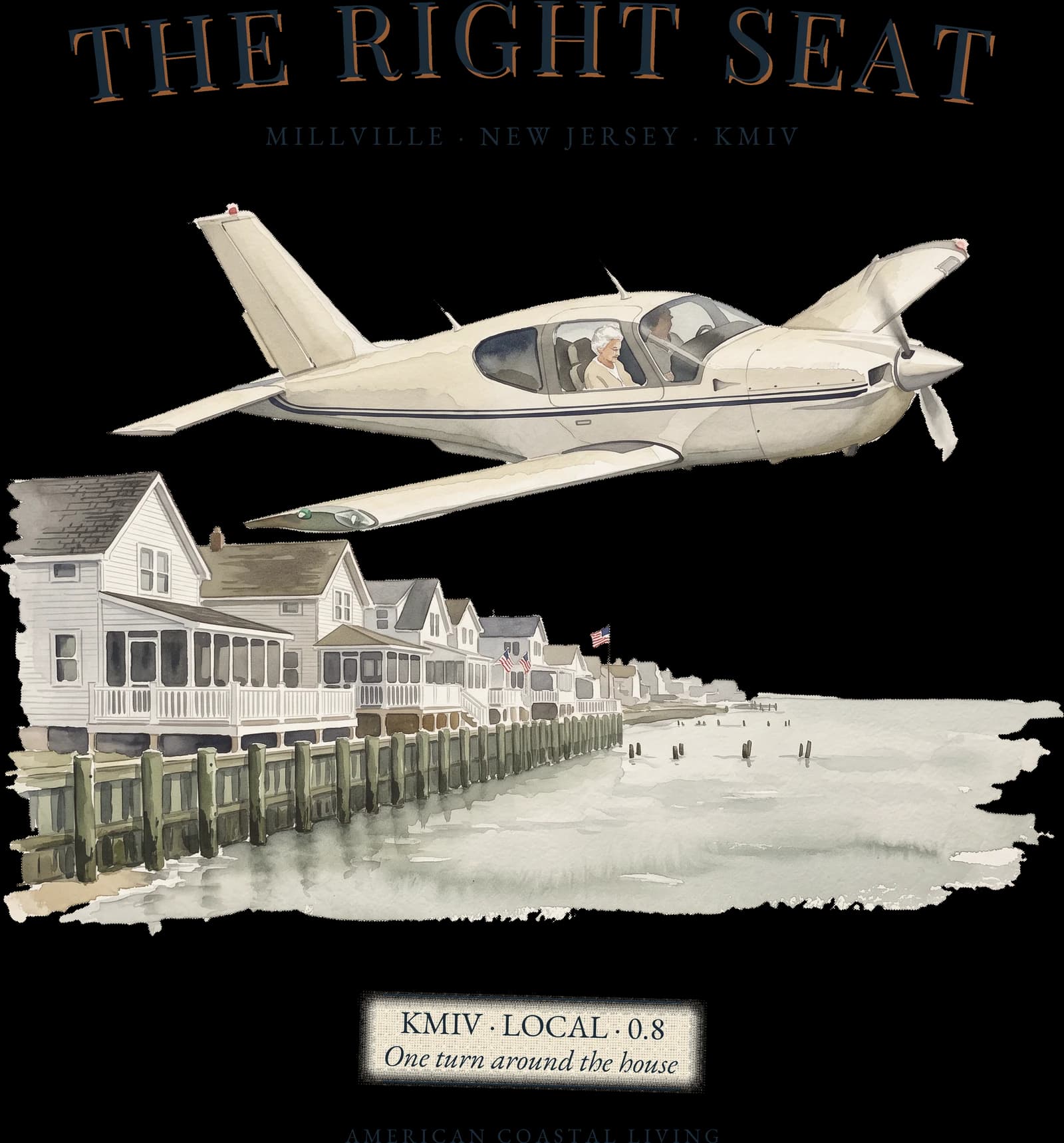
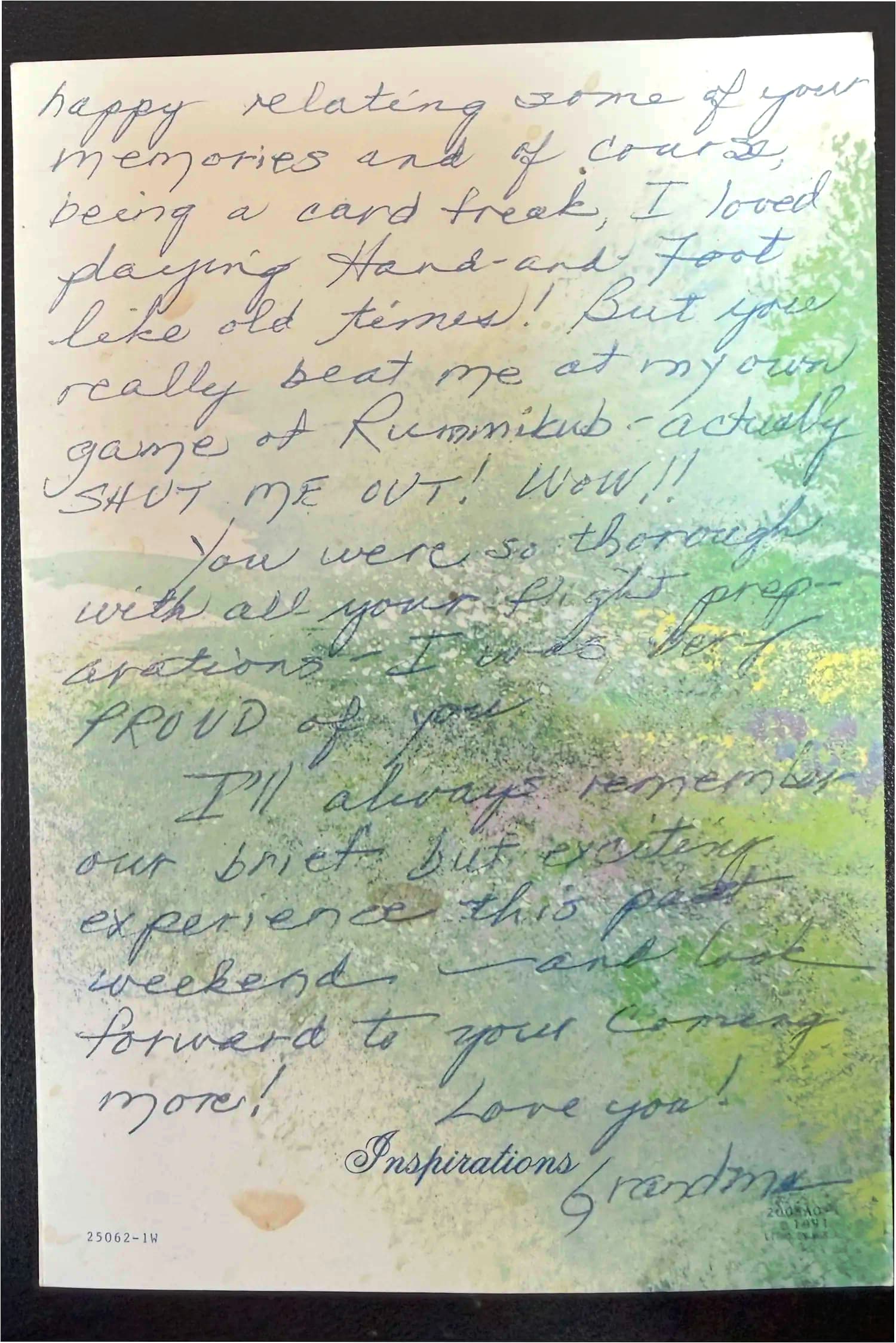
On the morning of 26 October 1996 I flew up from Frederick in the Trinidad, just me. She was waiting at Millville — and she had been watching that airplane come in, asking a man on the field what it was so she could be sure it was me. We went flying together for about an hour: over the bay, over Fortescue, low passes along the shoreline so she could see her beloved cottage from an angle she had never seen it from. I wanted to give her that view. Then back to Millville, chocked in, and a drive through the marsh to The Landing in Newport. She was already thinking about the she-crab soup before we touched down. That was always her order — and I always made sure she had an extra container to take back to the cottage. I flew home to Frederick alone that evening. She had her soup.
Places like Fortescue are all along this coast — communities most people have never heard of, built by families who worked the water and kept the traditions alive without asking anyone to notice. I started this because those places, and those people, deserve to be celebrated.
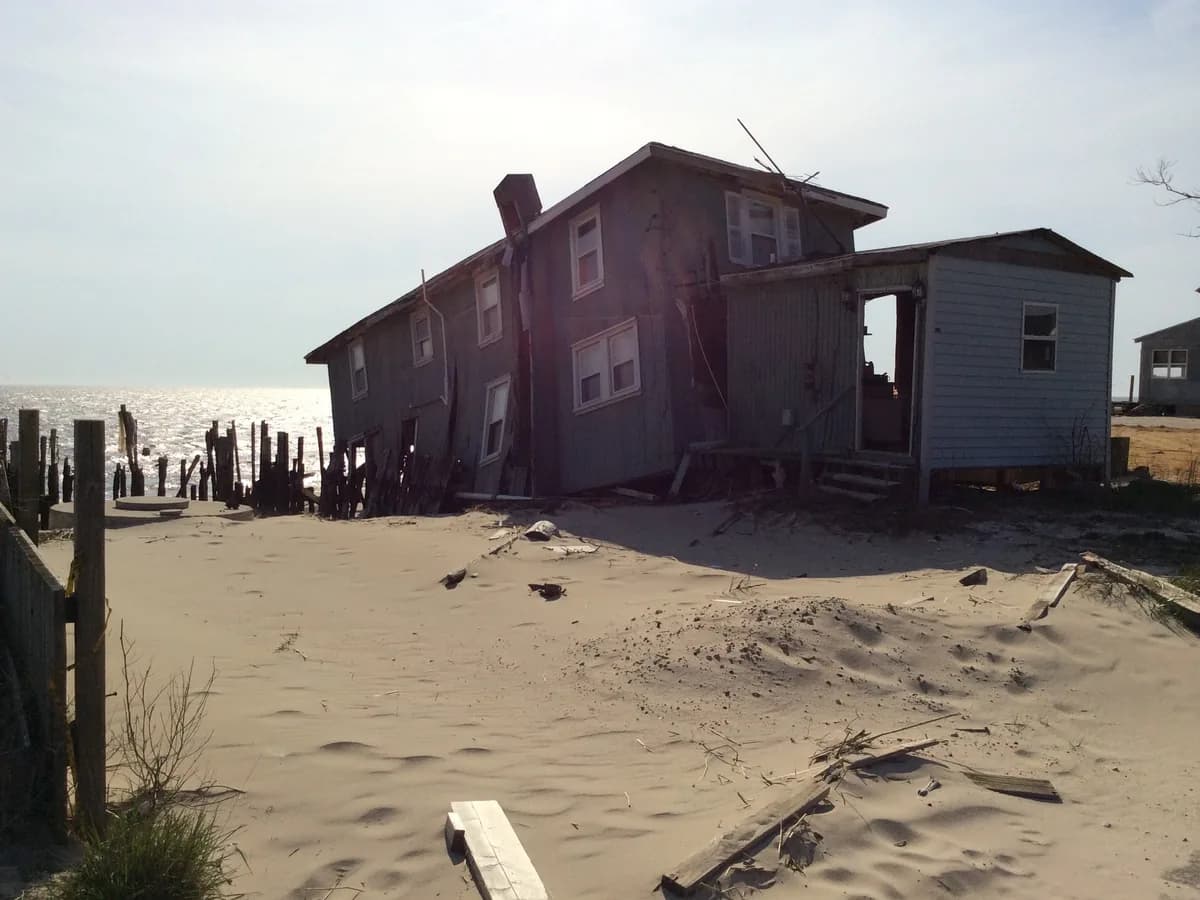
Fortescue, April 2014 — scroll →
One Turn Around the House
One Hour, 26 October 1996
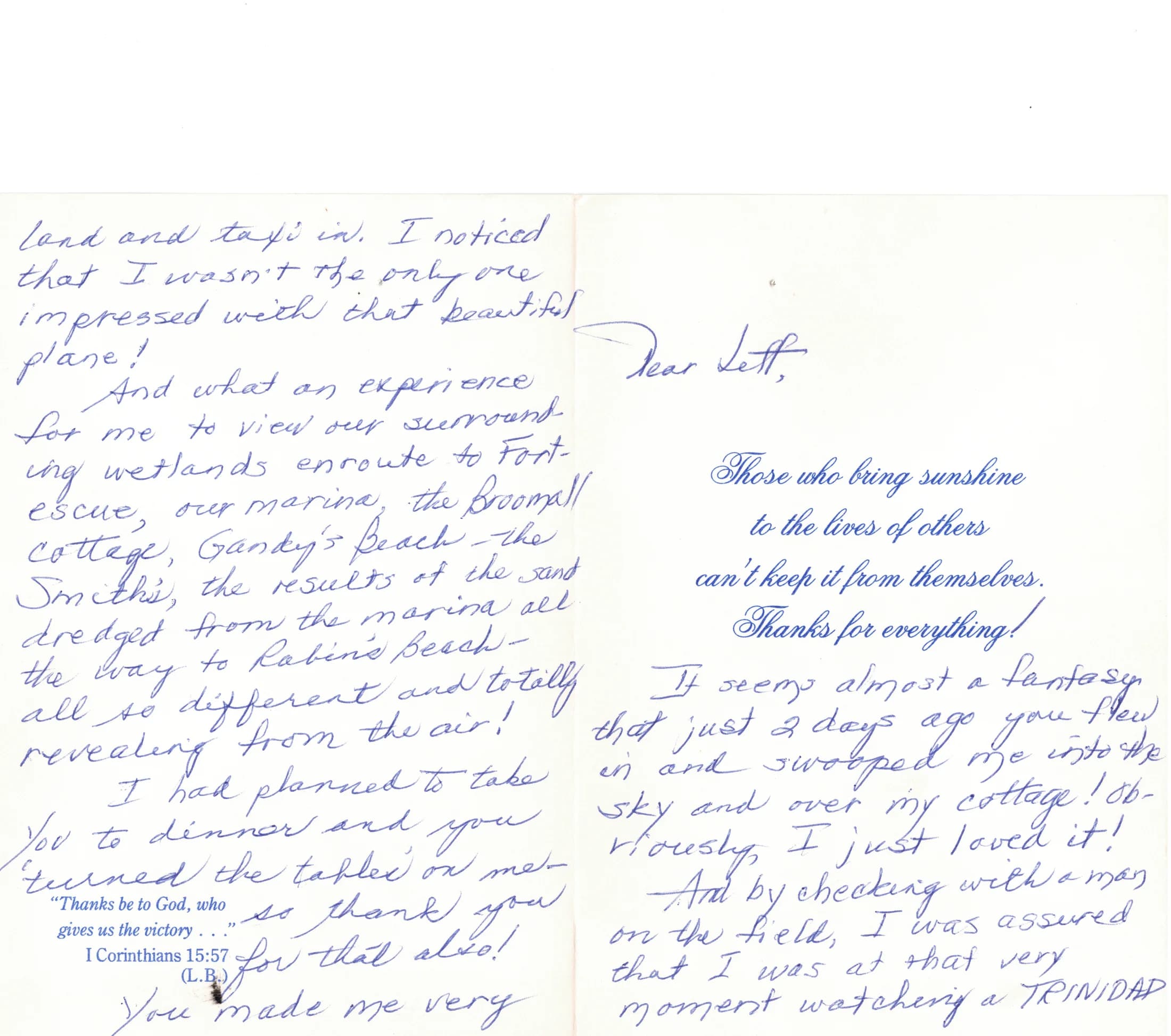
And Two Days Later, In Her Words
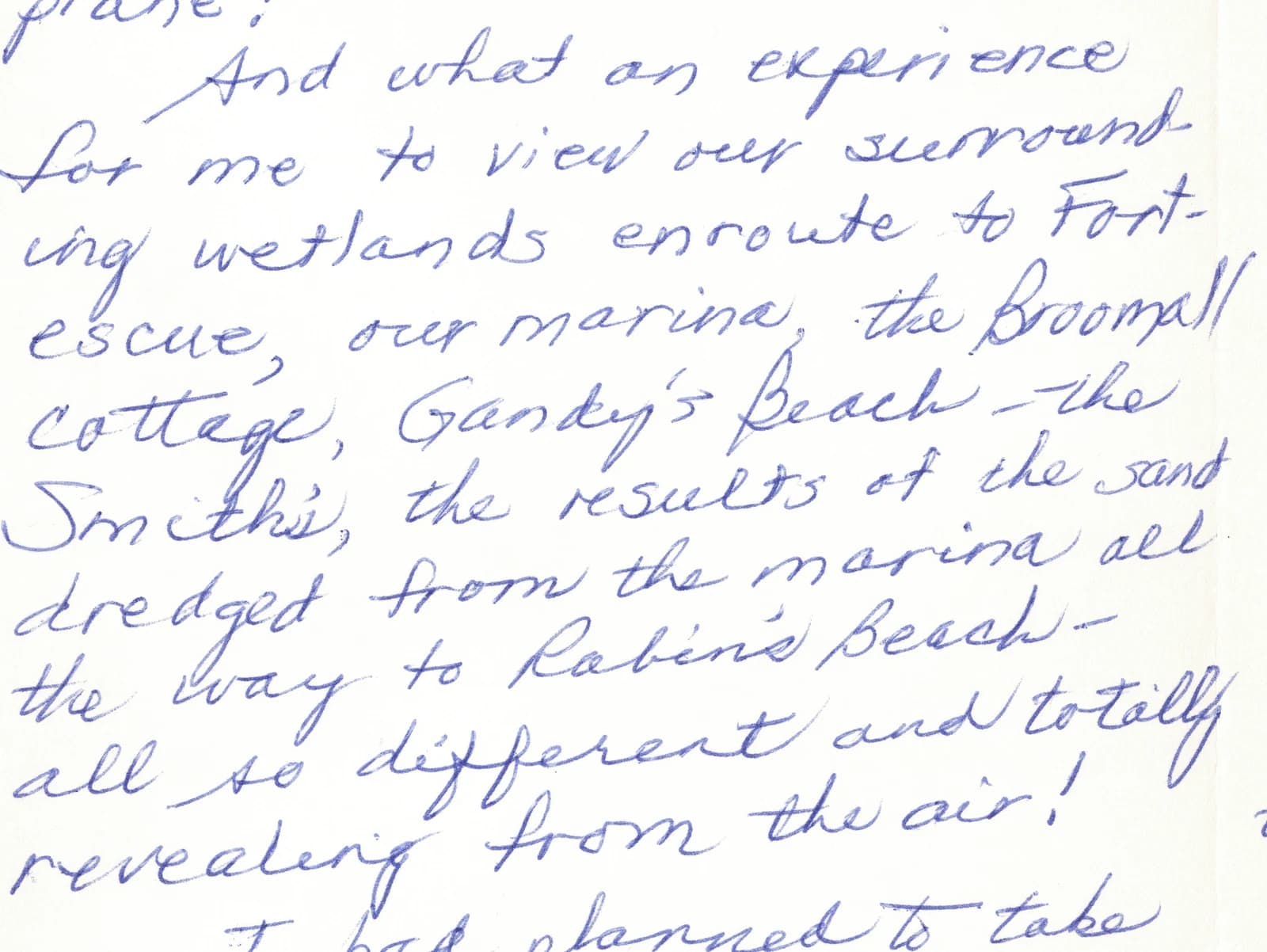
“And what an experience for me to view our surrounding wetlands enroute to Fortescue, our marina, the Broomall cottage, Gandy's Beach — the Smith's, the results of the sand dredged from the marina all the way to Robin's Beach — all so different and totally revealing from the air!”
Grandma · 28 October 1996
The Date
26 October 1996
The Airplane
Trinidad N5551U
The Logbook
2.8 hours, three landings
Frederick to Millville, an hour over the bay, then Millville home again — three landings in the logbook, and one of them was hers.
The Founder
Close Enough to See It
I started my career at AOPA — the Aircraft Owners and Pilots Association — not because the airlines weren't my goal, but because in the early 1990s they weren't hiring. As it turned out, that timing was a gift. Working at the center of general aviation did something to me. It showed me that the soul of aviation lives below the flight levels — in the small airports, the grass strips, the pilots who fly because they cannot imagine not flying. I started instructing on the side out of Leesburg, Virginia, and those cross-country trips with students had a habit of ending at coastal airports and waterfront restaurants, which suited me fine.
When the airlines started hiring again, I began transitioning — part time through the summer of 1998 and all of 1999 — and on January 14th, 2000, I started flying regional jets full time, first with Comair and then Shuttle America. The airline world is more methodical than people imagine. You fly the same routes, the same airports, the same sequence of cities. You get very good at very specific pieces of sky. What it gave me, more than anything, was time in the cockpit — and a deepening respect for the country below.
In 2015 I transitioned to private aviation, flying Citation CJ2s and CJ3s for a decade before moving to the Phenom 300 in January 2025. Flying private brought the GA world back in a way the airlines never could. You rarely go to the same place twice in a row — each rotation brings at least one new airport, often a coastal strip or a field most airline pilots have never heard of. The community of people who care deeply about the flying itself, not just the destination, was all around me again. In some ways, it felt like coming home.
On the descent — working down through the terminal area along a coastal shoreline — you start to see it. The docks. The working boats. The fish houses that have fed these towns for longer than anyone alive can remember. And if you know the coast at all, you already know there's fresh local seafood somewhere close to that runway. Finding it became a ritual. It still is.
What thirty years of coastal approaches have taught me is that the traditions holding these communities together — the craftsmanship, the self-reliance, the pride in doing hard work right — are the same traditions this country was founded on. They are worth celebrating. They are worth wearing. American Coastal Living was built from that conviction.
“An airplane is just how you get close enough to see it.”
— Jeff Broomall, Founder
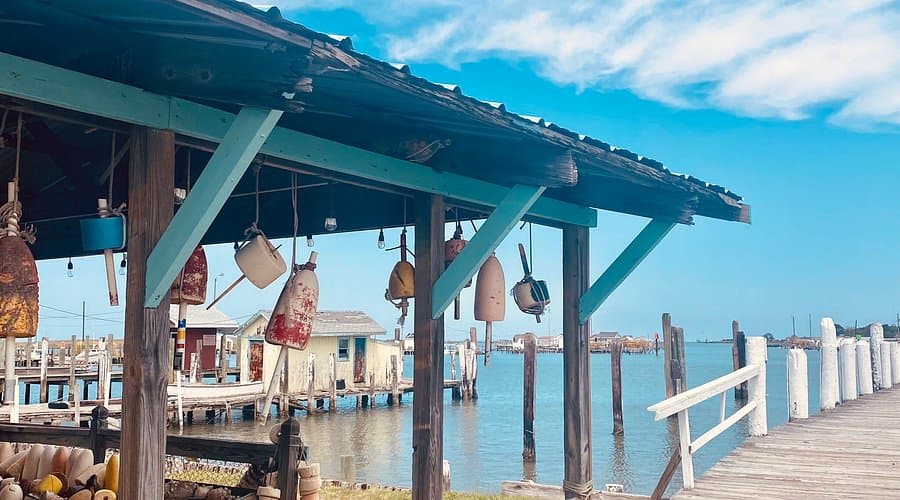
Tangier Island, VA
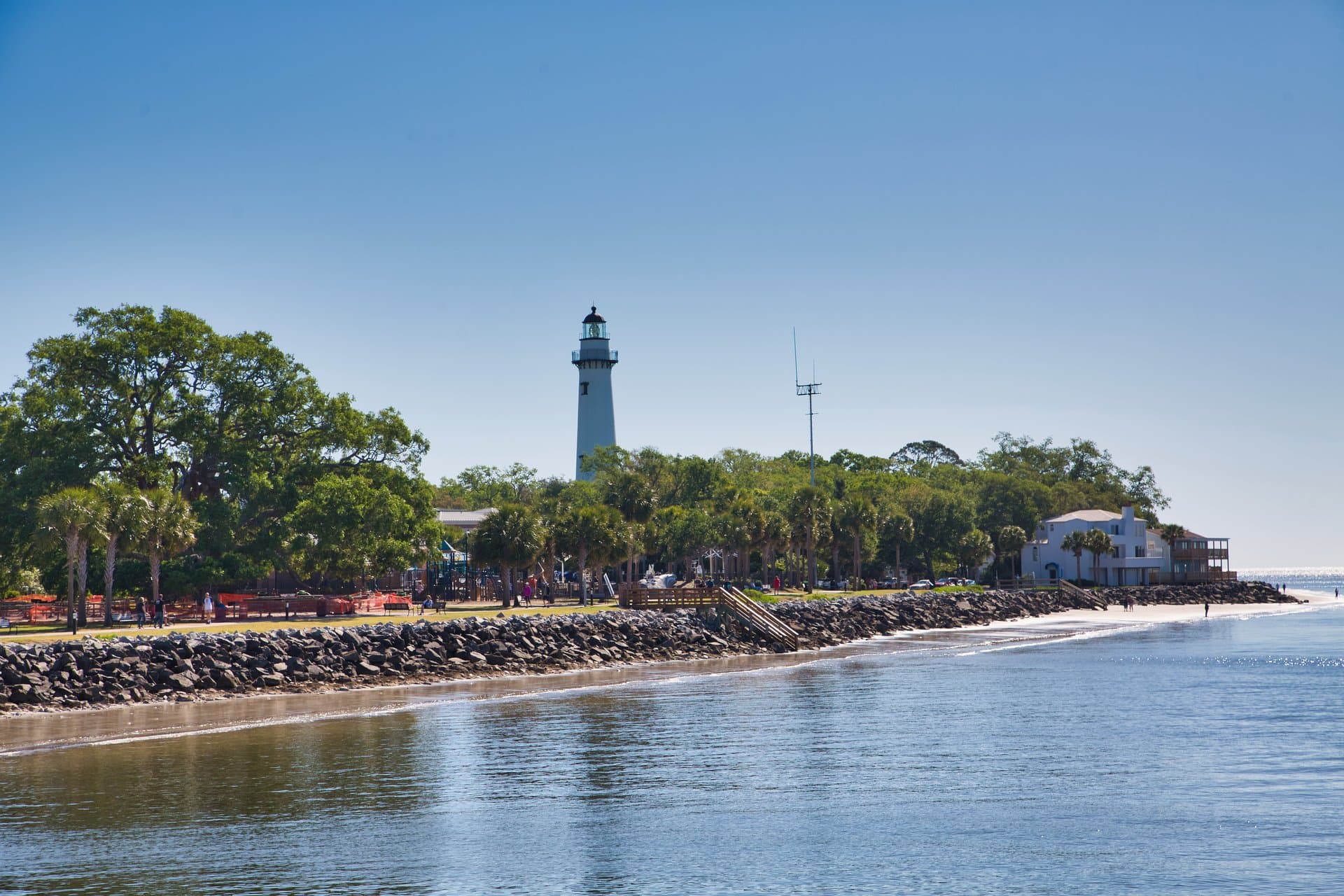
St. Simons Island, GA
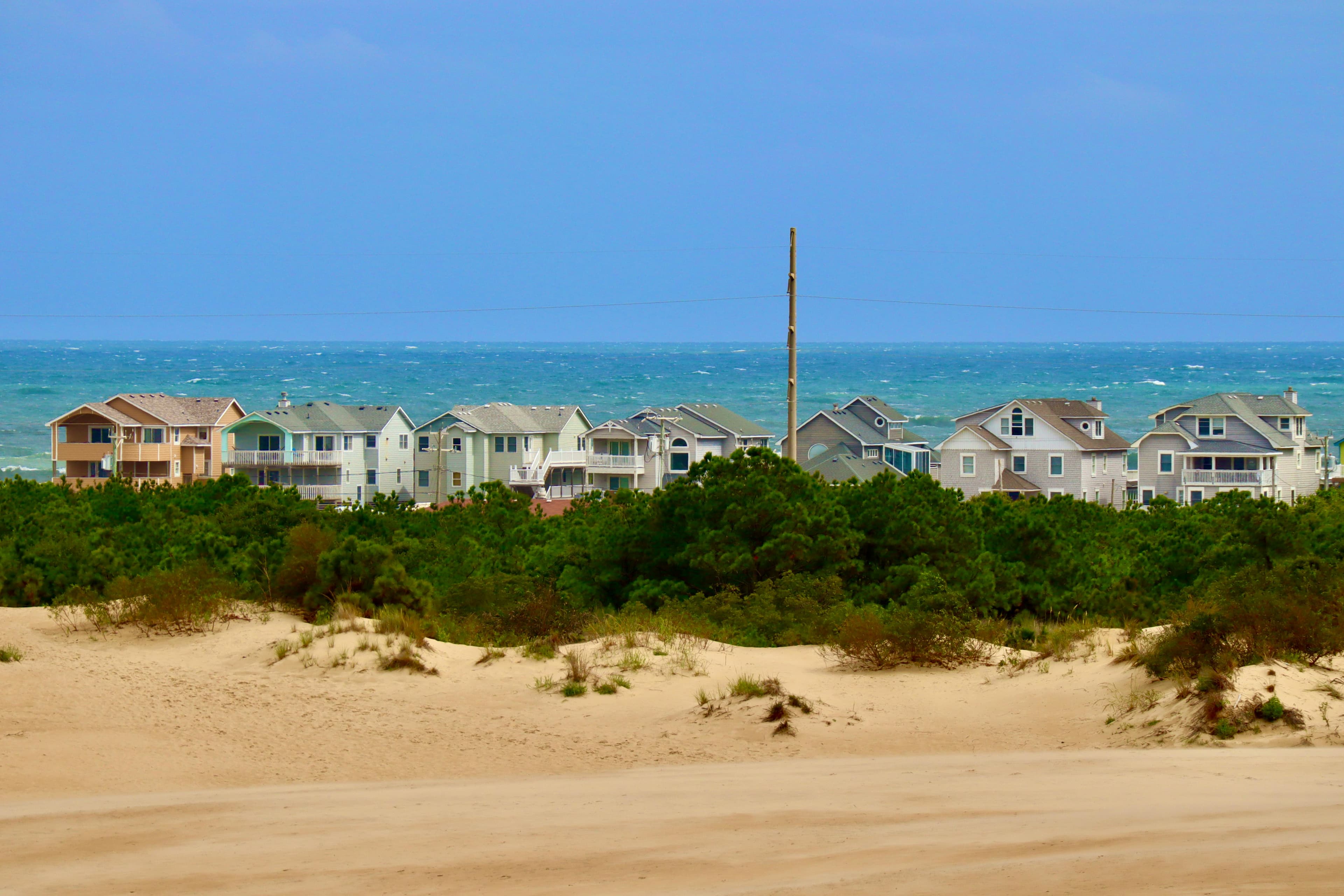
The Outer Banks, NC
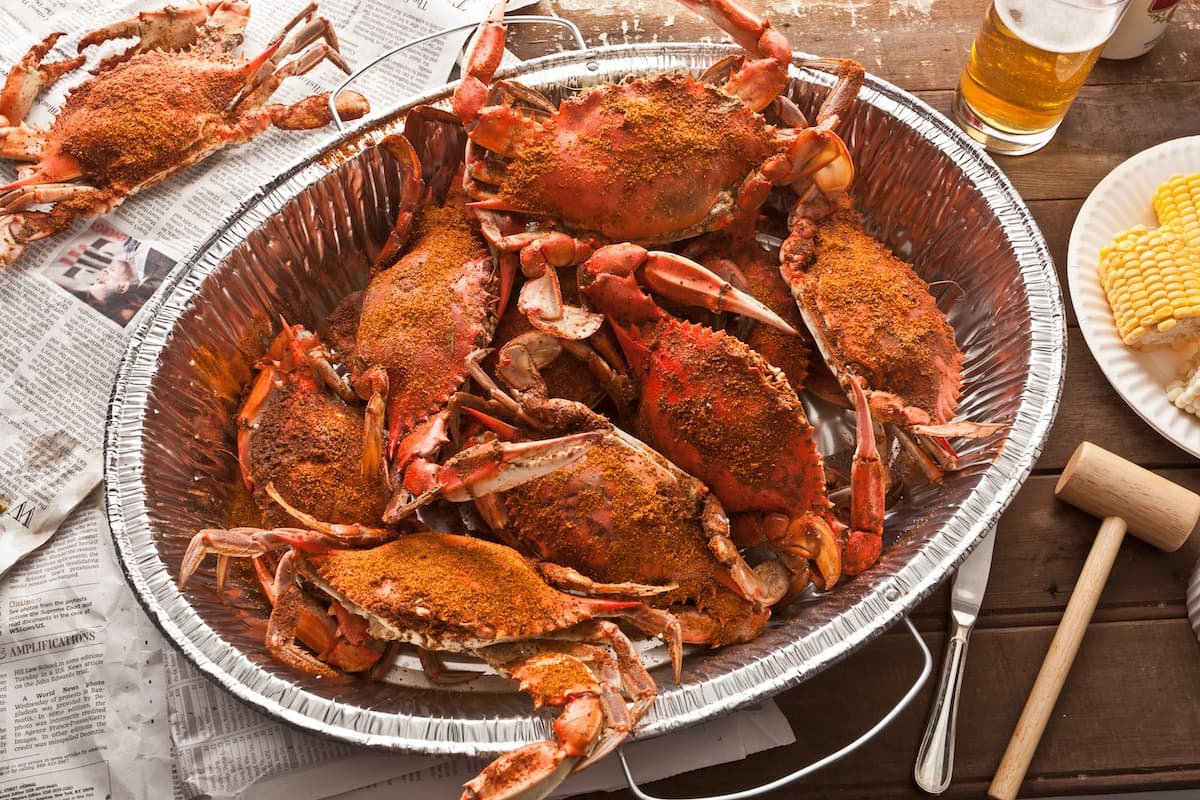
The Table
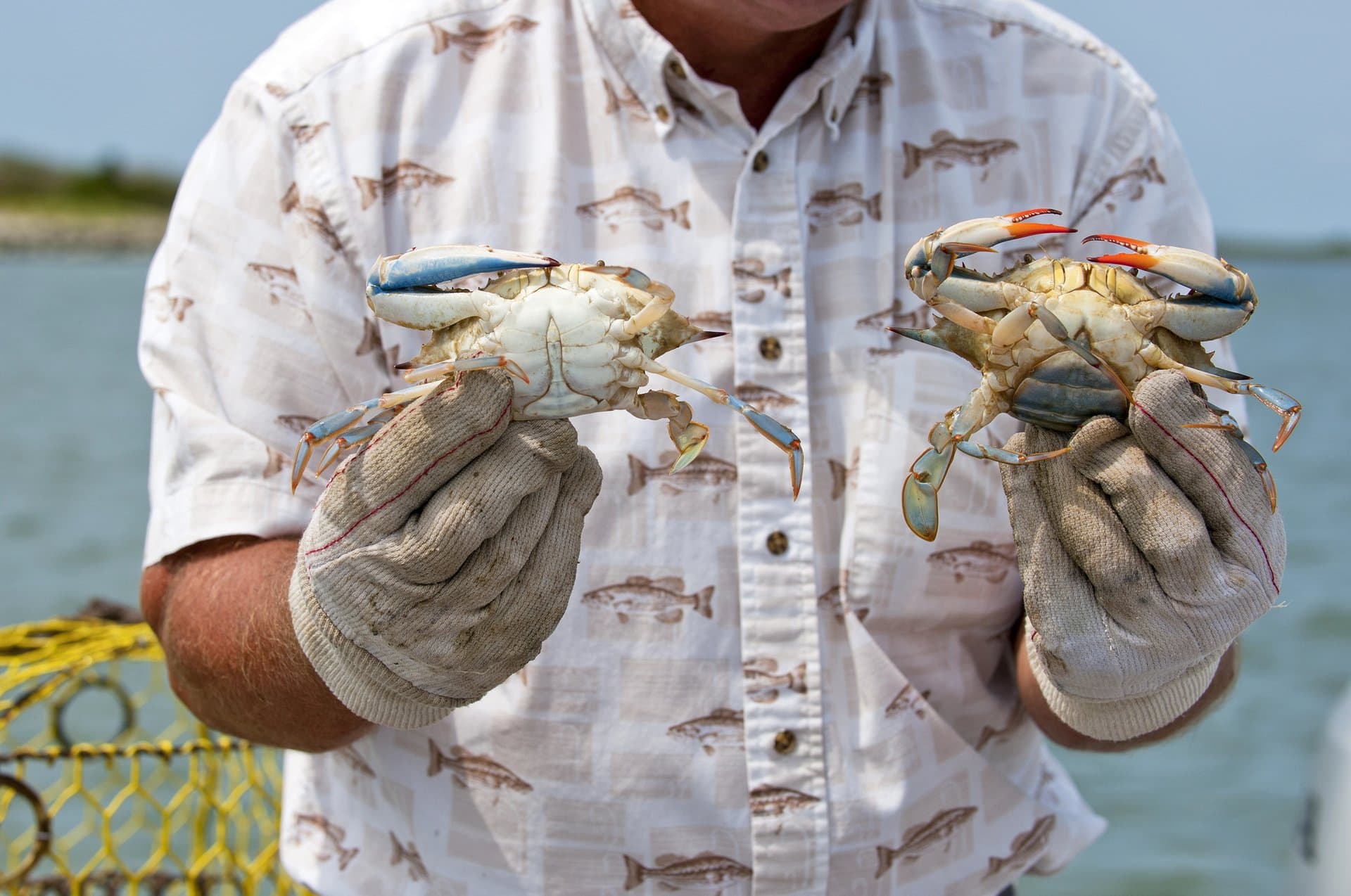
The Mascot
“Callinectes sapidus.”
From the Greek and Latin: beautiful, savory swimmer.
In 1896, Smithsonian zoologist Mary Jane Rathbun formally named the blue crab and, perhaps without realizing it, wrote the perfect brand brief. Callinectes sapidus — beautiful, savory swimmer. The genus from the Greek for beautiful swimmer. The species from the Latin for savory. A creature so perfectly itself that the scientist who named it simply described what she saw and what the coast had always known.
What the name doesn't capture is the disposition. When threatened, the blue crab doesn't retreat — it rises. Claws spread wide, body braced, ready to face whatever's coming. It doesn't know it's outnumbered. It doesn't care. That's not aggression — that's dignity. It is one of the most American things in the water.
The watermen who have built their lives around these shores have been doing the same thing for generations — holding their ground through every storm, every shift, every change the coast has thrown at them. People who never asked for recognition, only the freedom to do the work. That is our mascot. That is our spirit.
The Name
Callinectes sapidus
The Range
Atlantic to the Gulf
The Posture
Claws raised. Ground held.
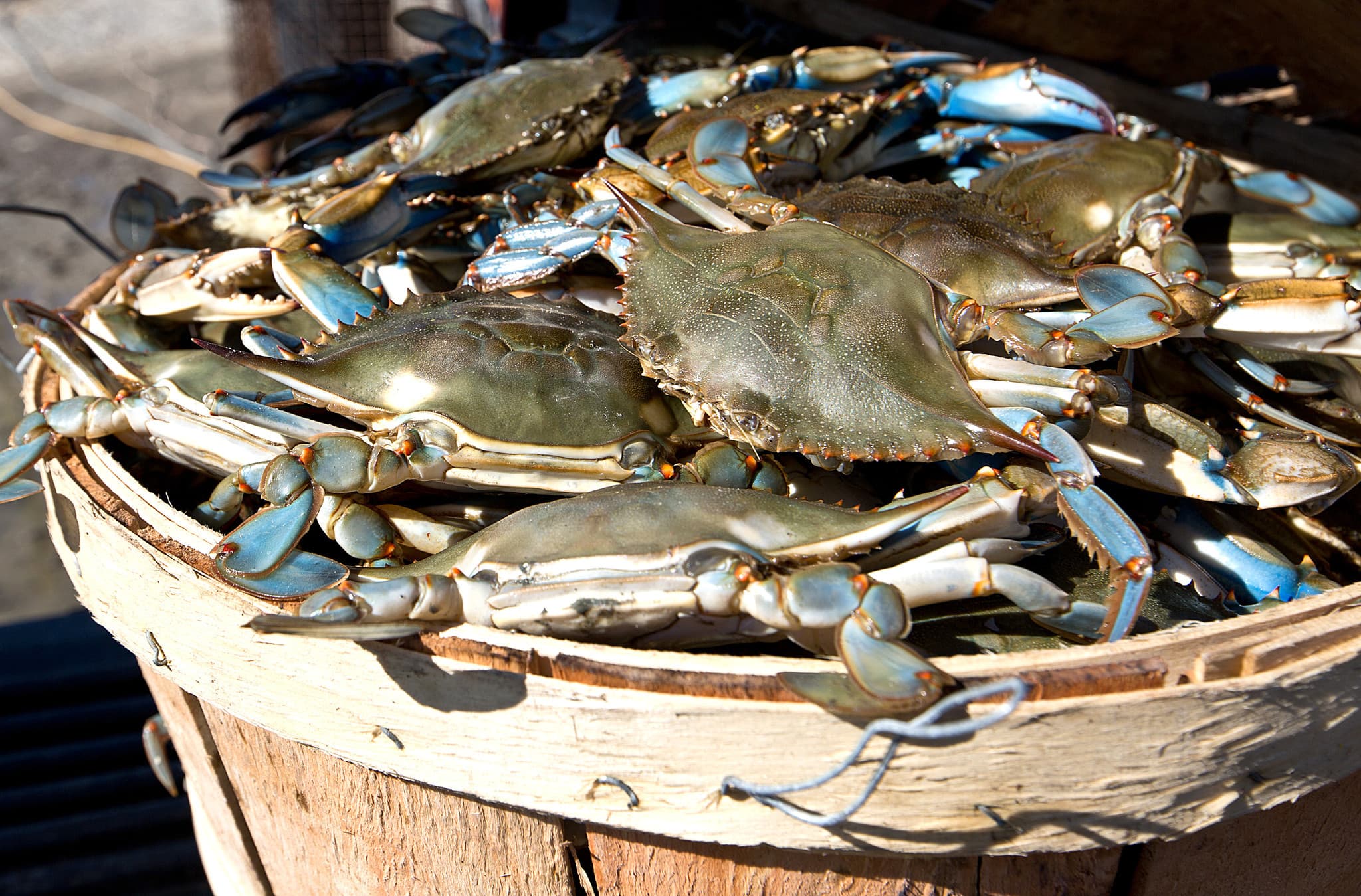
Proudly American.
Proudly Coastal.
Proudly Ours.
This is the story of a coast that helped build a country — and the people who have kept its traditions alive.
What I Stand For
The Three P's
Three words I intend to be held to. If they sound like your values too, you're exactly who this brand was built for.
Polite.
Respect Goes Both Ways
The founding generation understood that a free society runs on mutual respect — earned, not demanded. The coastal communities in this gazetteer built their culture the same way. You earn your place at the dock by showing up, doing the work, and treating people right. That standard hasn't changed.
Productive.
Built by Working Americans
The watermen, the fishermen, the family restaurants that have fed coastlines for generations — these are the productive Americans this country was designed around. People who solve their own problems, feed their own families, and take pride in what they build with their hands. That is who this brand is for.
Proud.
Proud of Where It Comes From
Proud Americans. Proud of the founding, the traditions, and the heritage of a coast that shaped this country from its earliest days. Proud of hard work and self-reliance. I am not embarrassed by any of it. If that describes you, you're exactly who this brand was built for.
Ready to Wear the Coast?
Explore the collection and carry the tradition wherever life takes you.
Shop the Collection