Every spring, something stirs along America's tidal coast. The water warms, the marsh grasses rise, and the blue crab — Callinectes sapidus, the beautiful swimmer — begins its annual journey that has defined life on these waters for generations.
The Season
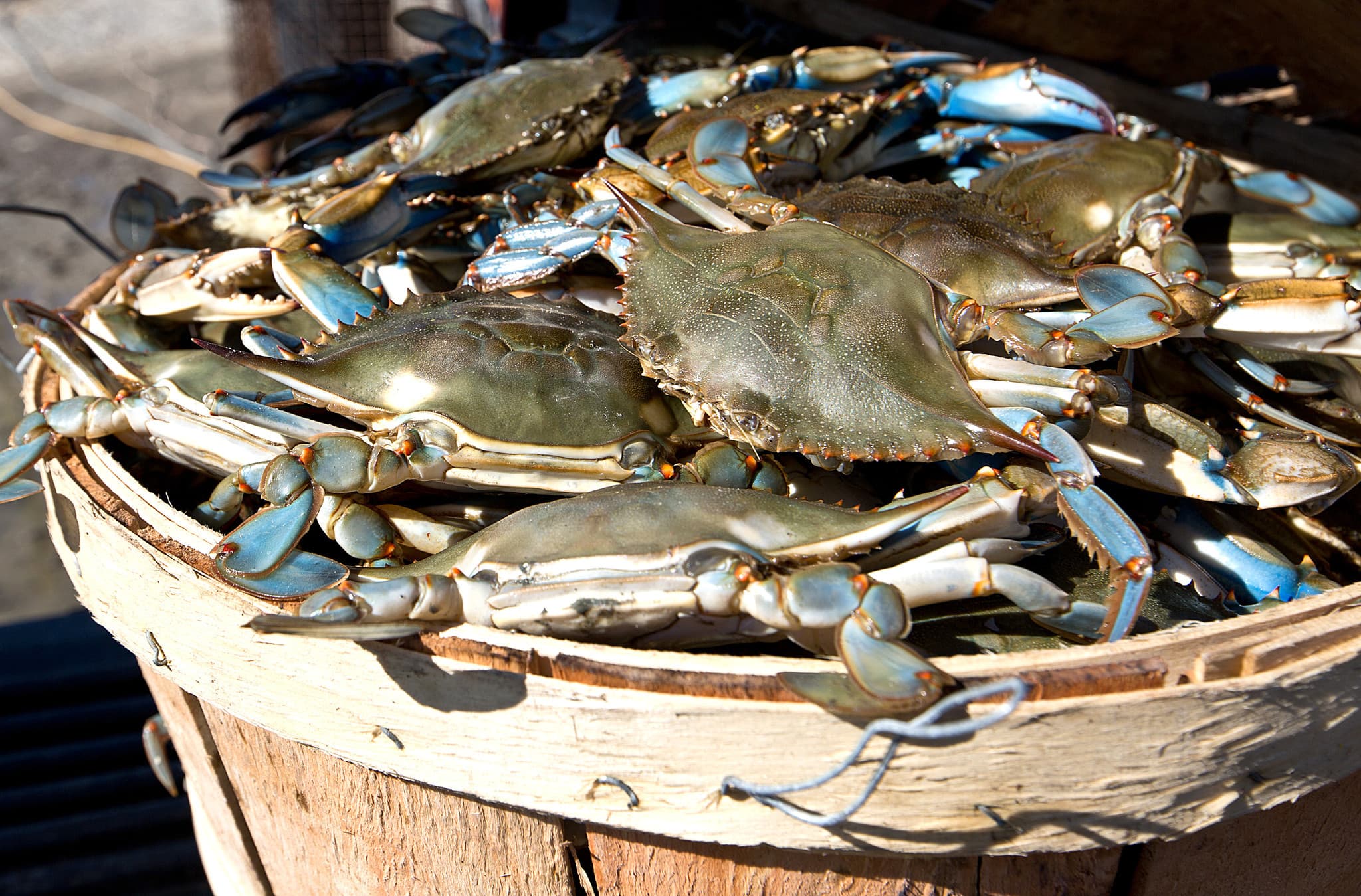
Blue crab season along the Atlantic and Gulf coasts runs from April through November, with peak harvest in July and August. That's when the crabs are fattest — the males heavy with meat, the females prized for their roe. The Chesapeake Bay alone produces tens of millions of pounds of blue crabs in a good year, making it the single most important blue crab fishery in the country.
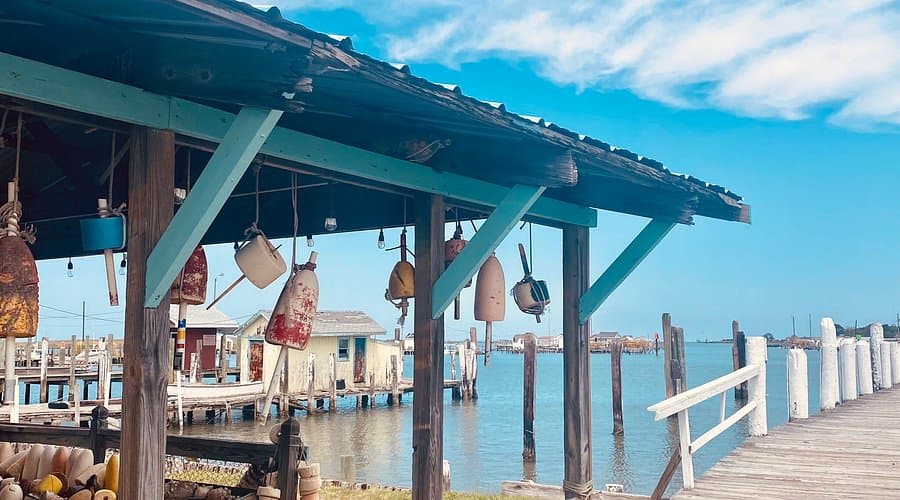
The watermen who work the Bay wake before dawn. By the time the sun clears the tree line, their boats are already moving between crab pot buoys set the day before. It's hard, physical work — pulling, culling, re-baiting, resetting — repeated hundreds of times across a morning. But it's a tradition that stretches back before anyone alive can remember, passed father to son on these same creeks and rivers.
“The Bay gives and the Bay takes. You learn to work with it, not against it.”
How to Buy Them
If you're not pulling them yourself, the best crabs come direct from the docks. Find a waterman's co-op or a dockside seafood market — Crisfield, Maryland calls itself the Crab Capital of the World, and they're not wrong. The crabs there are live, local, and sold the same morning they were caught. Skip the grocery store. Go to the water.
Look for Number 1 Jimmies — the large males. They're the most work to pick but the most rewarding. A bushel of Number 1s will run you anywhere from sixty to a hundred dollars depending on the season and how good the harvest has been. It sounds like a lot until you're sitting around a paper-covered table with a dozen of them in front of you.
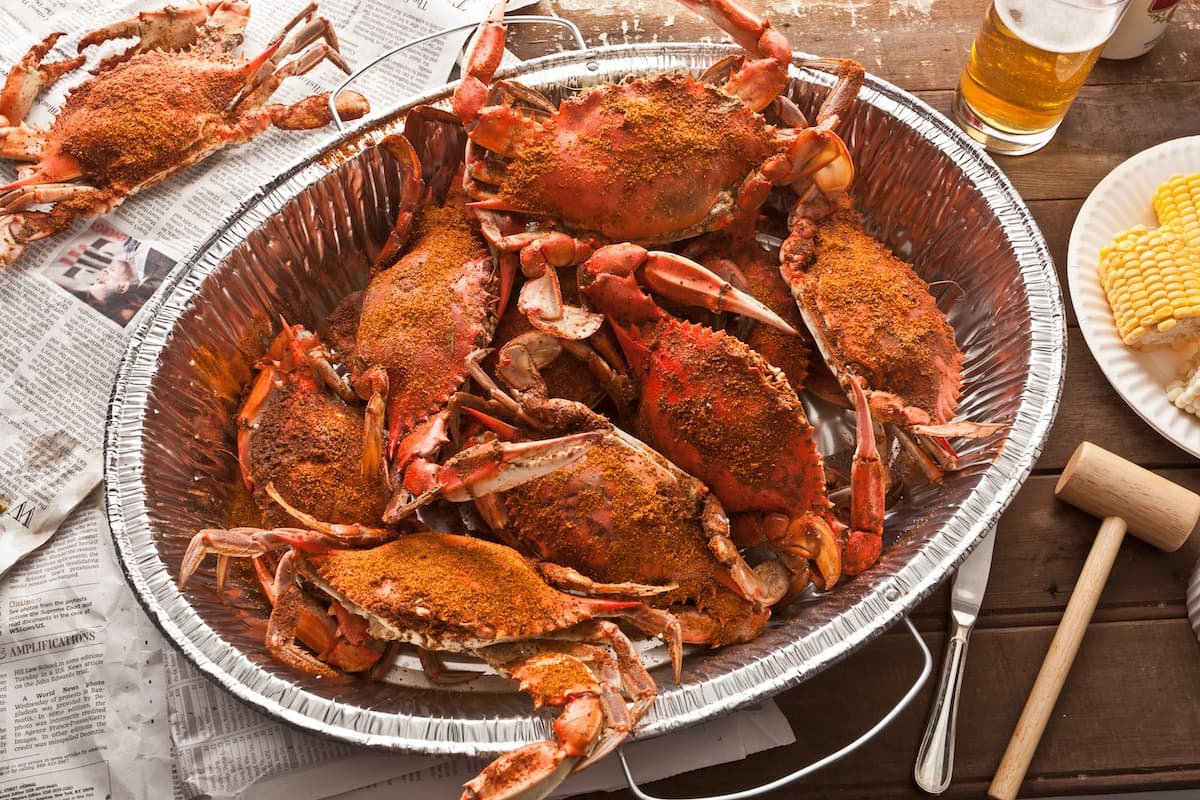
A proper steamed blue crab spread. Old Bay is non-negotiable.
The Right Way to Eat Them
Steamed, not boiled. Old Bay, not just salt. Brown paper on the table, not tablecloths. A wooden mallet, a knife, cold beer, and patience. That's the coastal way, and it hasn't changed.
The ritual of picking crabs — cracking the shell, pulling out the lump backfin in one clean piece if you're good at it, dipping it in butter or vinegar depending on where you're from — is as much about the table as it is about the food. A proper crab feast can last three or four hours. That's entirely the point.
Whether you're on a dock in Crisfield, a back porch in Apalachicola, or a patio overlooking the Chesapeake at dusk, the experience is the same: the water that raised these crabs is right outside, and for a few hours, you're completely connected to it. That's what American coastal living is.